When and How Should you Start Puppy Training?
Got a new puppy and wondering when to start training? The answer is simple: as soon as they arrive home. Those first days are packed with learning opportunities. Whether you’ve just collected your pup from the breeder or they’ve been with you for a few days already, early training helps build confidence, connection, and calm behaviour right from the start.
As a professional puppy trainer in Oxford, I often help owners make the most of these early weeks—so here’s what I recommend.
🐶 Start Early: Why Timing Matters for Puppy Training
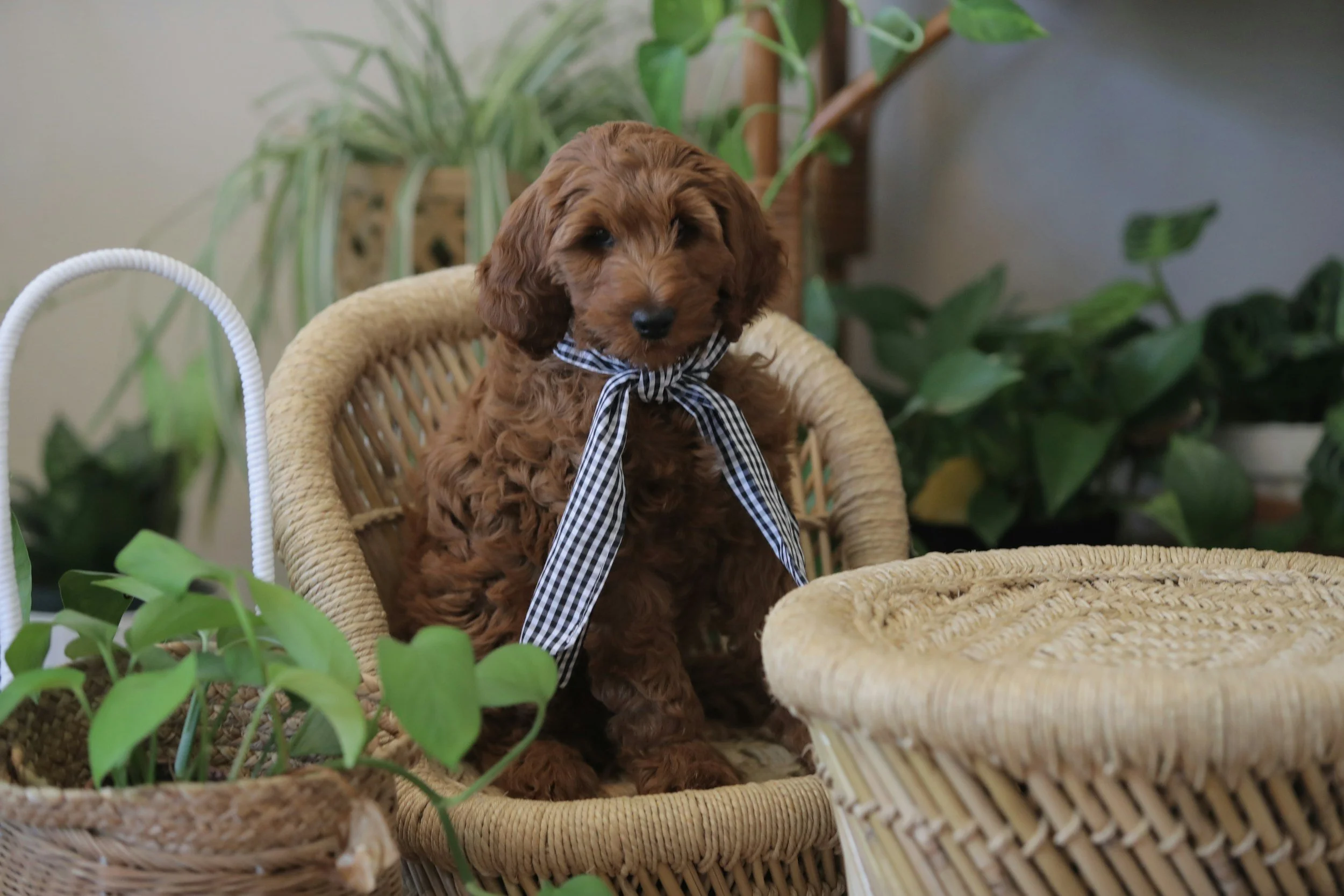
Puppy training doesn’t have to wait until they’ve had all their jabs or started pulling on the lead. From day one, your puppy is learning—about you, your home, and what gets your attention. This is the perfect time to set the tone in a gentle, rewarding way.
Leaving training until “later” often means you’re accidentally reinforcing habits you’ll later want to change. But early training doesn’t mean strict rules—it means clear, kind guidance.
🛏 Your Puppy’s First Night: Creating Calm and Safety
That first night can be a big transition for a little pup. They’ve just left their littermates, their mum, and the only environment they’ve ever known. You can help them feel safe by:
Sleeping in the same room as them for the first few nights
Using familiar scents (like blankets from the breeder) to comfort them
Avoiding overwhelming them with too much too soon
This isn’t spoiling them—it’s showing them that they are safe, and you are someone they can trust.

🐕🦺 What Does Early Puppy Training Involve?
In the early weeks, puppy training is less about formal cues and more about creating helpful habits and trust.
Here’s what early puppy training can look like:
Reinforcing calm behaviour (e.g. settling on a mat)
Teaching name recognition and attention cues
Using treats, toys, or praise to reward desired behaviours
Introducing short, playful training moments throughout the day
Supporting them through first experiences (e.g. handling, car rides, visitors)
Positive reinforcement is key: reward the behaviour you do want, and ignore the behaviours you don’t where appropriate—especially if they’re simply exploratory or attention-seeking.
🕐 Routine = Reassurance: How Predictability Builds Confidence
Dogs thrive on predictability. Creating a gentle daily rhythm helps your puppy feel safe and secure. You can:
Feed at consistent times
Offer naps in the same spot
Have short training sessions at set times
You can also give subtle cues that help reduce separation anxiety. For example:
A cosy throw left on the sofa might mean “I’ll be right back.”
A mug on the windowsill could signal a longer outing—but your return is guaranteed.
While you’re away (even briefly), it’s helpful to give your puppy something to do independently. This might include:
Scattering a few treats inside a cardboard box
Offering a LickiMat (licking can be very calming and gives them something to focus on)
Setting up a short freework activity, where your puppy can sniff, explore and make choices at their own pace
These types of activities encourage calm behaviour, reduce frustration, and help your puppy learn that being alone doesn’t need to feel stressful.
Mealtime Can Be Part of This Too
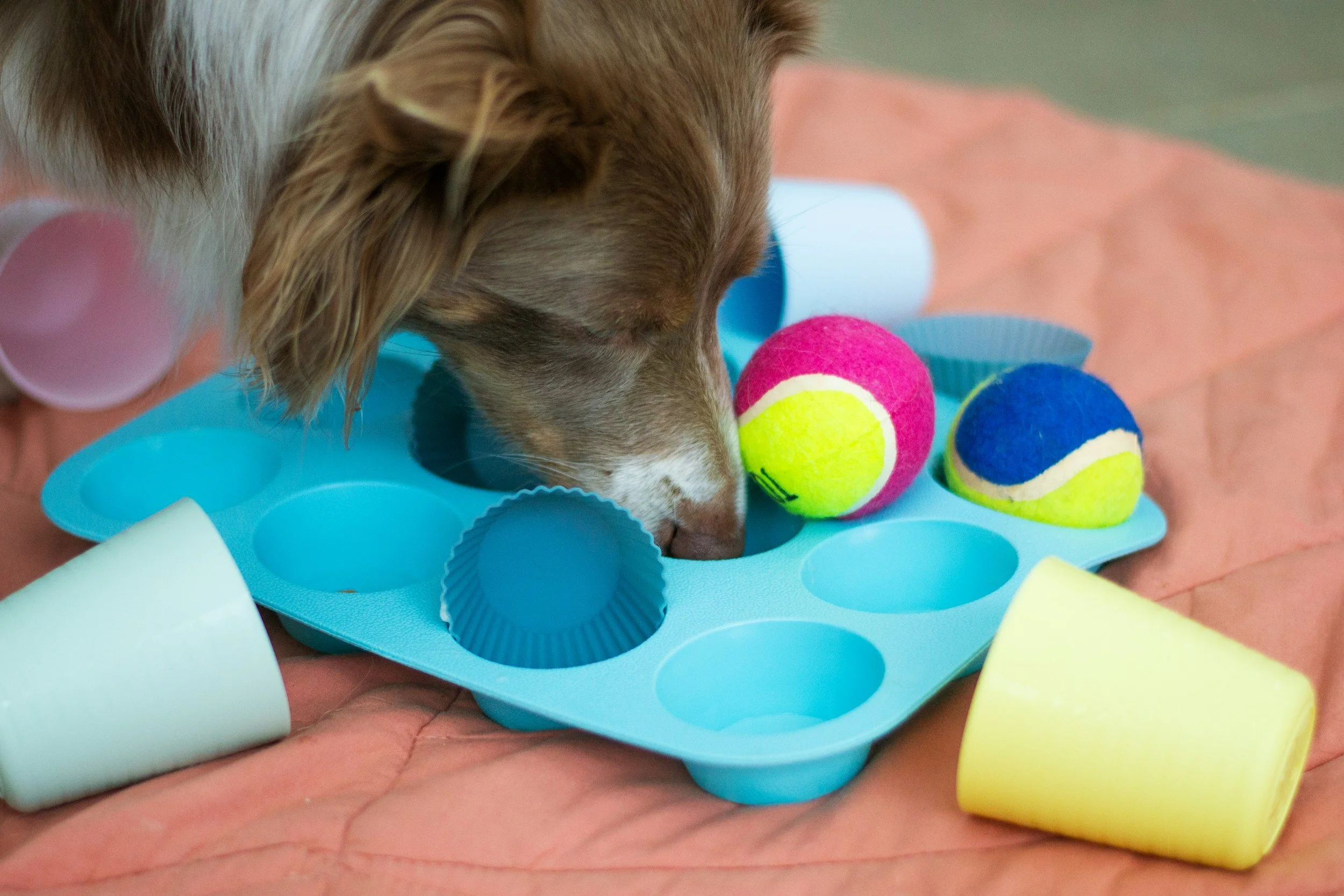
Your puppy doesn’t always need to eat from a bowl. Enriching mealtimes by letting them work for their food—using scatter feeding, snuffle mats, food puzzles, or stuffed Kongs—can:
Slow down fast eaters (which may reduce the risk of bloat)
Provide valuable mental stimulation
Encourage calmness and focus
Help prevent boredom-related behaviours
Strengthen your bond through positive experiences
A food bowl still has its place, especially for convenience or specific needs, but mixing things up can be incredibly beneficial—particularly during those early training weeks.
🐾 Real Life Training: Simple Cues and Calm Expectations
Rather than trying to teach everything at once, focus on everyday training moments:
Reward quiet behaviour when they’re resting
Encourage them to sit before meals or putting the lead on
Reinforce loose-lead walking by rewarding them when they walk with you by your side
For recall, call their name followed by a cue like “come,” then reward them with a treat or a quick game—so they learn that coming to you is always worthwhile. This sets them up beautifully for recall training later in puppy school classes.
These early lessons build the foundation for polite behaviour, confidence, and a happy relationship.
📍Looking for Puppy Training in Oxford and Surrounding Areas?
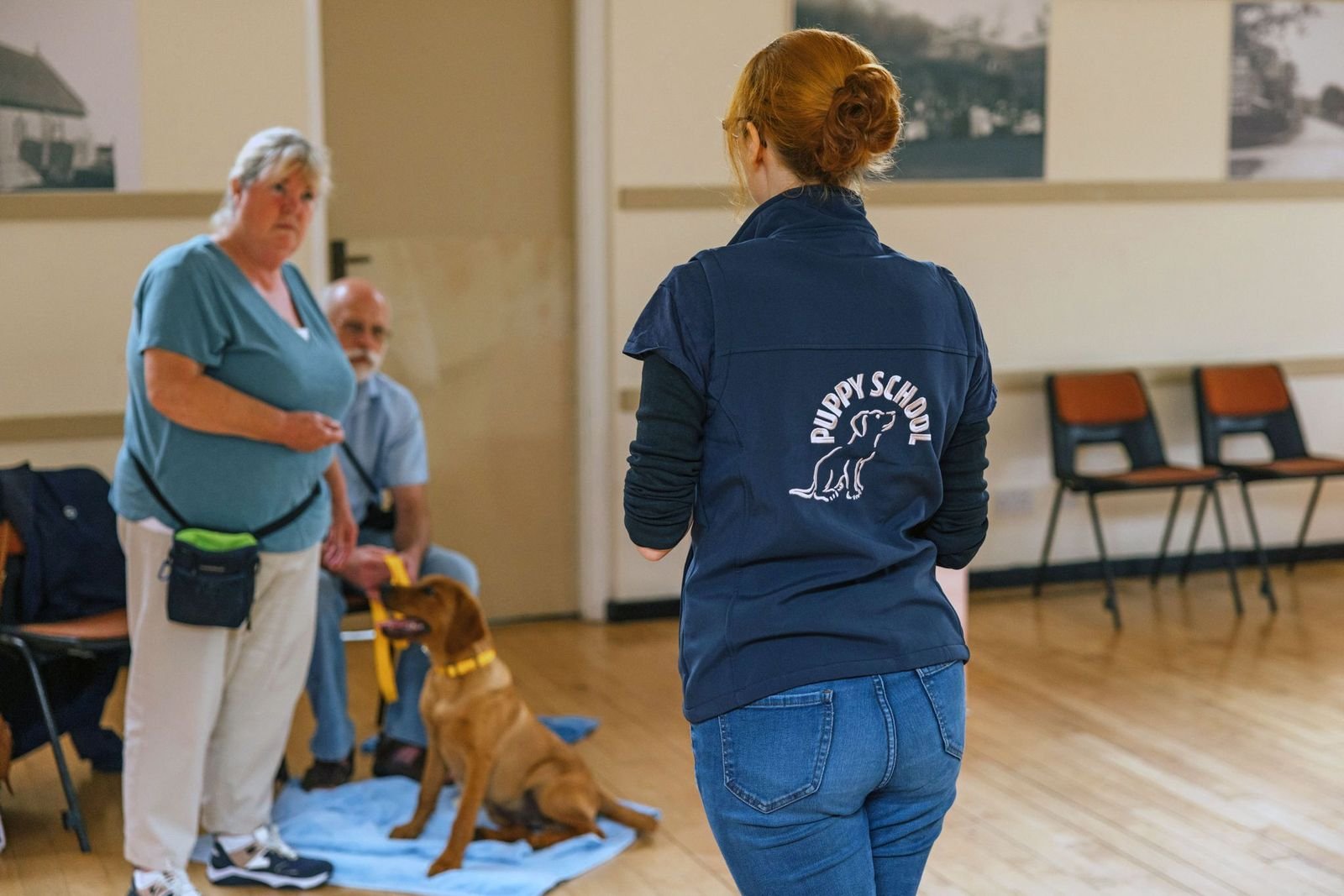
Need support to get started? I offer friendly, reward-based puppy training in Oxford and surrounding areas, with small group classes and real-life support to help you:
Understand your puppy’s needs
Build confidence in handling and cues
Prevent future behavioural issues before they arise
Whether you’re a first-time puppy parent or simply want expert guidance, I’d love to help you set off on the right paw.
📝 Summary: The First Few Weeks Shape Everything
You don’t need to wait for the “perfect time” to start training your puppy. Now is ideal. Every cuddle, cue, and calm moment is a chance to shape your pup’s behaviour in a positive way. By starting early, using routines, and working gently, you’re helping your puppy become a confident, well-mannered companion for life.
✨ Ready to get started? Join one of my puppy training classes in Oxford to start your pup’s journey with confidence, calmness, and connection.